

筑波大学院の課題のため、このシリーズをしました。「写真家または画家の作品集を参照し、屋外の風景を撮影してください。」という課題でした。
鬼海弘雄さんの写真を選びました。特に、「東京迷路」の写真は私に大影響を与えました。鬼海さんは、この撮影シリーズで、色々なコンセプトを探りました:「人々なしけど命の形跡」、「間・空」、「珍しい」、「線と対比」などです。初めに、写真を見ると、「普通、つまらない、興味が薄い」と考えるかもしれません。ただ、もうちょっと詳しく見ると、珍しい特徴に気づきます。像、建物の対称、混乱している都市景観、洗濯物、現代建物に囲まれている古い家、色々分かります。この特徴は日常生活が不思議で幻想になります。その上、多くの写真に人は写っていません。ここで命の形跡を示しているといえるでしょう。
作品を通して鬼海さんは次のことを私たちに問いかけています。人々がいないなら、人々がいなくなったら、何が残るのか?そこにあるのは何の痕跡なのか。人間が創った構造、アレンジ、生活、習慣、味、文化、イベント、時期の流れ、何がそれらを伝えるのか。
私は、何もない場所・空間、リミナルスペースに興味があります。特に夜・雨・雪の時に好きです。日常のありふれた場所にある命の形跡、細部の面白さ、奇妙な要素を探すことが好きです。特に都市景観の中にあるそれらの要素に興味があります。時々、命は人間の奇妙さを通して表現されます。 散歩の途中に、そうした奇妙さを見つけるのが好きです。
私にとって、それらの要素は命と生活の本質を表しているように思います。私は個人として人類としての一部として何が残されるのか子供のころから自問自答しています。それは鬼海さんの作品に深い関連しているので、その写真を選びました。
I did this series for an assignment at the University of Tsukuba Graduate School. The brief was: “Referencing the work of a photographer or painter, take photographs of outdoor landscapes.”
I chose the photography of Hiroh Kikai. In particular, his “Tokyo Labyrinth” series had a massive influence on me. In this series, Kikai explored various concepts: “the absence of people but the traces of life”, “empty spaces/in-between spaces”, “the unusual”, and “lines and contrasts”. At first glance, you might think the photos are “ordinary, boring, or uninteresting”. However, if you look a little closer, you may notice unusual features: statues, architectural symmetry, chaotic cityscapes, laundry, and old houses surrounded by modern buildings. These features turn everyday life into something mysterious and fantastical. Furthermore, many of the photos don’t feature people: they show the traces of life instead.
Through his work, Kikai asks us: if people aren’t there, or if people were to disappear, what would remain? What kind of traces would be left behind? What conveys the structures, arrangements, lifestyles, habits, tastes, cultures, events, and the passage of time that humans have created?
I am interested in empty places, spaces, and liminal spaces. I especially like them at night, or in the rain or snow. I enjoy looking for traces of life, interesting details, and strange elements in mundane, everyday places. I’m particularly interested in those elements within urban landscapes. Sometimes, life is expressed through human eccentricity. I love finding that kind of oddity while out for a walk.
To me, those elements seem to represent the essence of life and living. Since I was a child, I’ve asked myself what will be left behind of me as an individual and as part of humanity. Because that is so deeply connected to Kikai’s work, I chose his photography.
テーマ:日常のありふれた場所にある奇妙な細部で人々の特徴の生活・命の形跡。
Theme: Traces of people’s lives and the shape of their existence found in the strange details of everyday, commonplace locations.
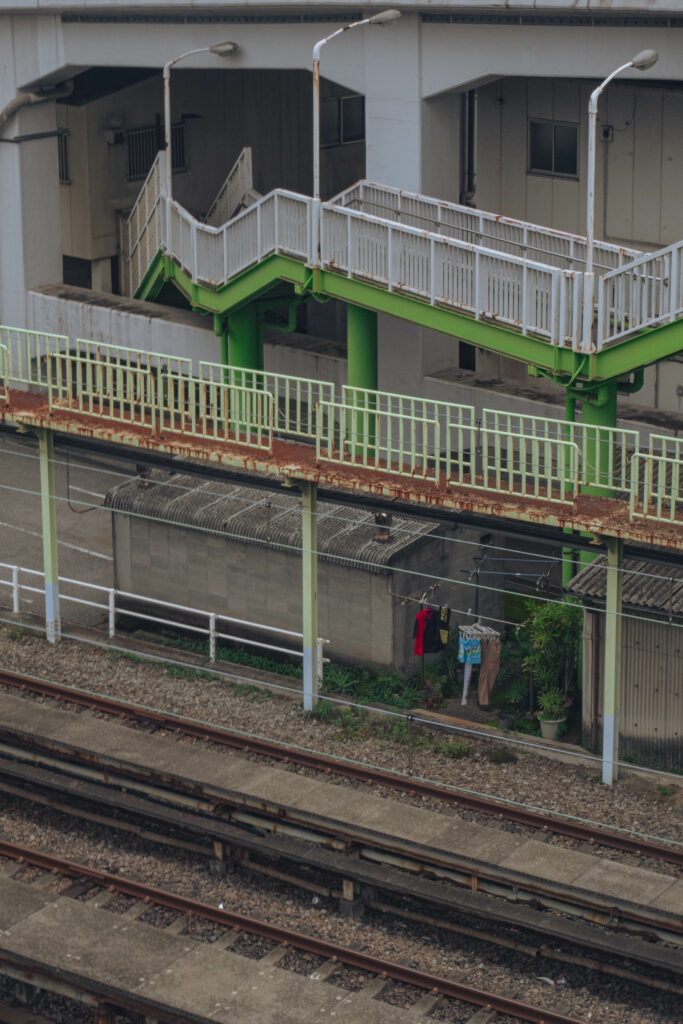
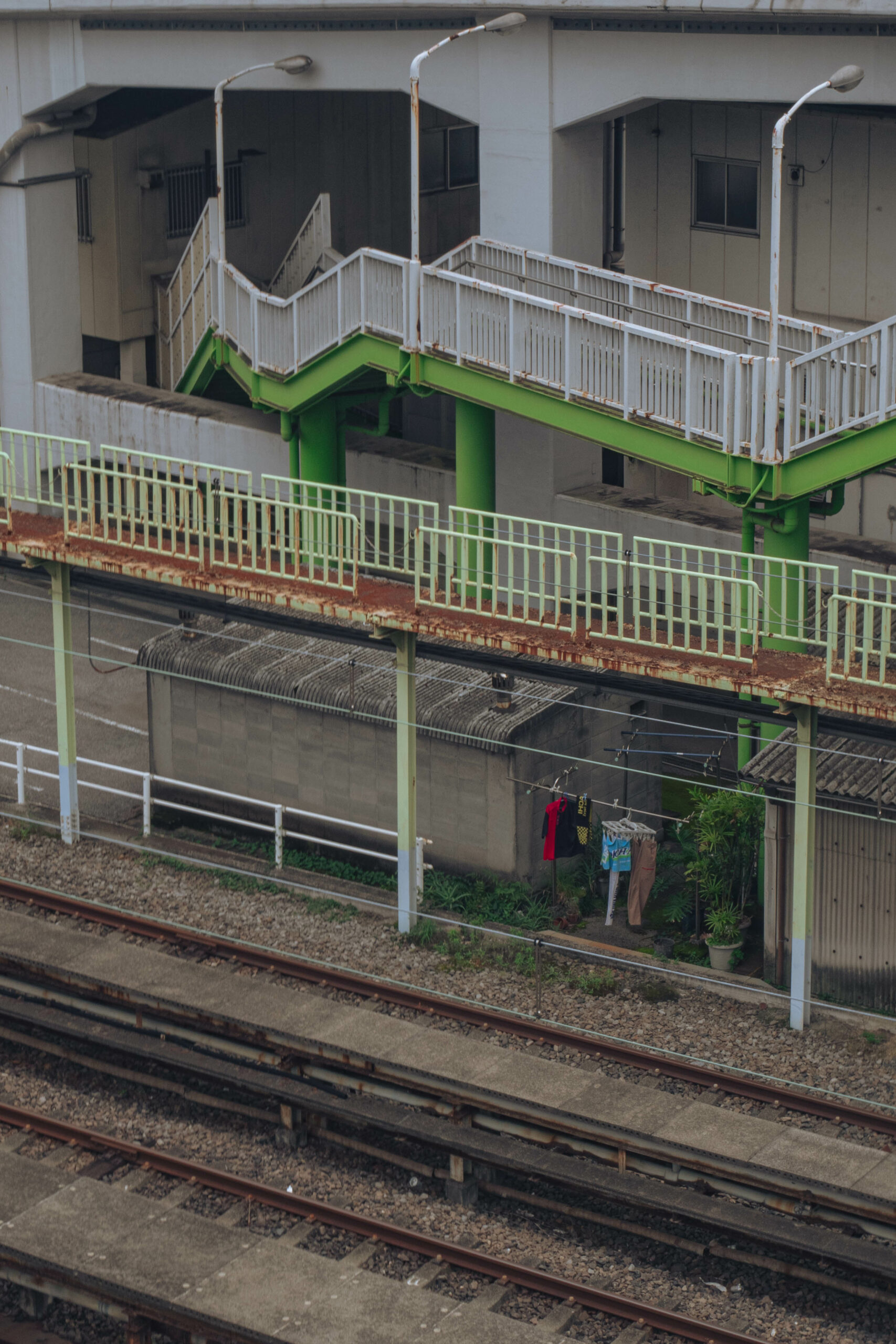
洗濯の日。
東京―上野 ・ 2026年7月。
色んな方向を向く階段は、私たちを探検へ誘っているけれども、掛けている洗濯物に反対されています。誰もいない、普通の住宅ではないが、誰かここに住んでいるらしいです。旅や様々な道を辿れていてきているが、結局家はかけている洗濯物の所です。
The different directions of stairs, inviting us to discover and move, are contradicted by the laundry hanging. No one in sight, not a dwelling in the norm, but someone is definitely living here. You may travel and take a lot of different paths, but home is where the laundry is.
お茶飲む?
東京―東長崎 ・ 2026年7月。
前に住んでいた場所で歩き回って、お茶をシェアしたがり待っている茶瓶を見つけました。カップ一つもありません。誰もいませんでした。この辺り全部綺麗でさっぱりしていますが、孤立している茶瓶だけ残ります。その状態は何なのかを自問しました。このようなありふれた場所での奇妙な要素が好きです。
Walking around my old neighbourhood, I stumbled on this teapot, waiting to share its tea. No cups. No one around. Everything looked neat, tidy but there is this pot alone. I wondered what was the story behind and I liked the strangeness of the situation in that very mundane setting.


神々が見守って、あそぼう!
東京―東長崎 ・ 2026年7月。
その小さい神社は現代建物に囲まれています。驚いたのはその珍しい光景です。小さくて古い神社は、現代景観の中で、子供の遊び場とスペースを共有しています。建物のスタイルや時代や色の対比、多様な人々向けの構造物、例えば大人の祈っている時に子供が遊んでいる、または神々が見守っている中子供が遊んでいると思い描いて、この対比感じていました。
This shrine is quite small and tucked between buildings. What stroke me is the unusual setting: a small old shrine, in a modern neighbourhood, sharing its space with children’s games. The contrast between the building’s styles and ages, the colours, their public, as I imagine adults praying while children play, or children playing under the gentle attention of the local gods, caught my eye.
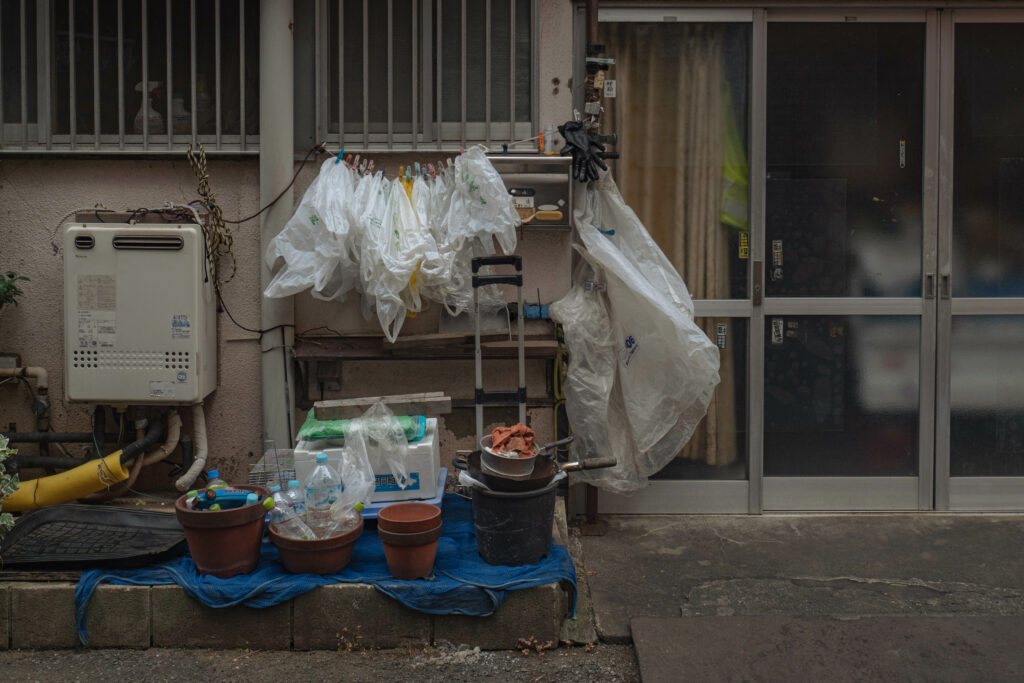
おじいさんの愛しいコレクション。
東京―椎名町 ・ 2026年7月。
狭くて静かな路地で、遠くからおじいさんが自分のコレクションを片付けているところ見ました。日本の家構えの正面で飾りやアイテムをいっぱい見せているところずっと驚いています。植物、政治家ポスター、動物のフィギュア、または亀の水槽も見えました。けれども、レジ袋を掛けている展示は初めてで、結構面白いと感じました。それを関連付けて考えるようになっています。
In a small quiet street, I saw a grandpa arranging his collection from afar. Japanese homes always amazed me by the decorations and items displayed in front of them: plants, posters, animal figures or even a turtle’s aquarium. But a huge collection of plastic shopping bags hanging there, it was a first and quite intriguing. And somehow, as I age, I relate.
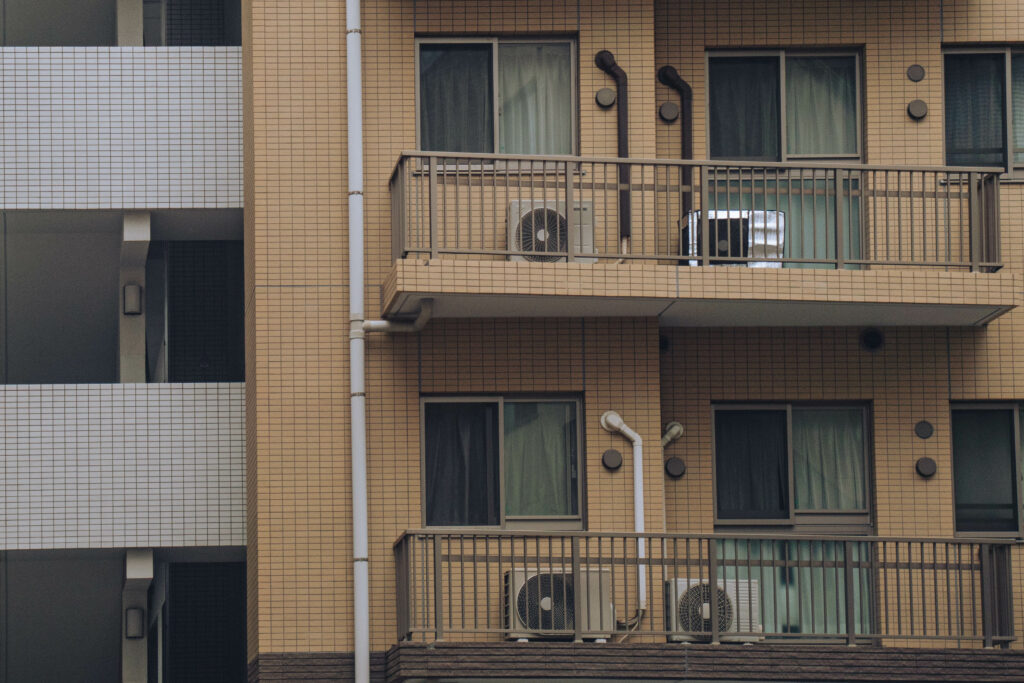
尊いな家電。
東京―東長崎 ・ 2026年7月。
色や形の対比あるビルに特別な興味を持っているので、その時にしばらく立って見ました。それから、灯台の光のような輝いてエアコンのカバーを見つけました。正面全体に一つだけです。建物はありふれているので、暗いスーツを着る人の世界で立派な服を着る人のような、この要素は上品で愛しそうだと感じました。誰かが真面目にこの家電を気にかけています。
I have a particular interest in buildings with a shape and colour contrast so I stopped a second to appreciate it. And then, I saw the aircon protection, shining like a lighthouse, the only one of all the façade. It looked so precious and somehow elegant, while the rest of the building was quite mundane, like a person with bright colours in an ocean of dark suits. Someone was taking care of this appliance seriously.
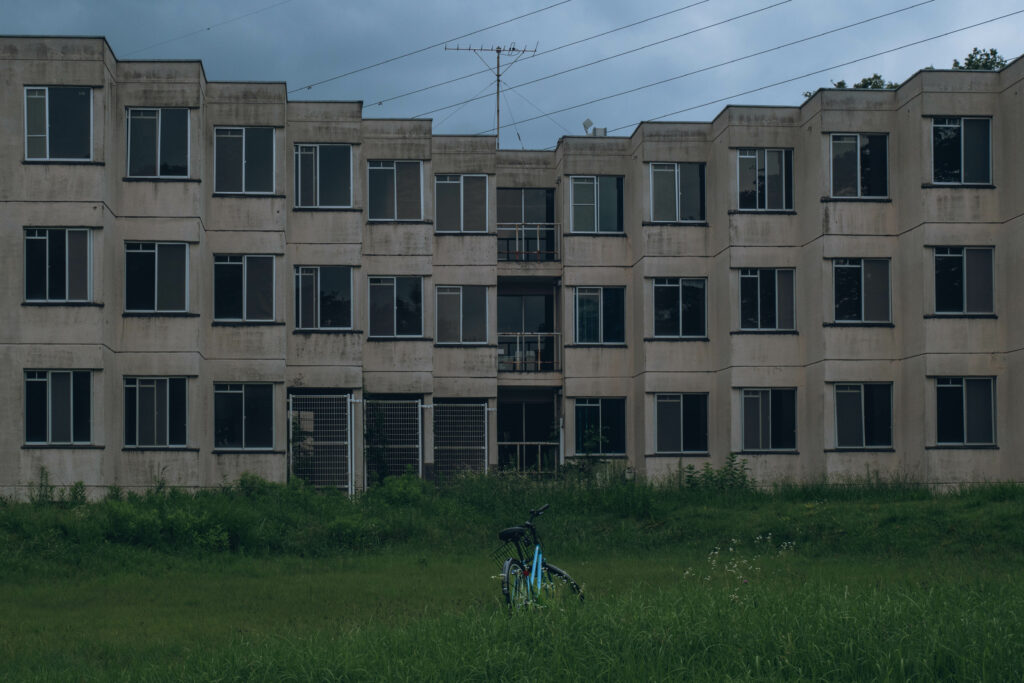
不思議な冒険。
茨城―筑波・ 2026年7月。
私が知る限り、このビルは学生向けの部屋でした。すり減ったカーテンがかけられている窓で、何十年も空き家のようです。なぜか、誰かが自分の新しい自転車を建物前に残しました。冒険し、探りに行ったのだろうか?光景がかなり奇妙だと思いました。真っ黒な窓がある古い建物と冒険へ急にいなくなったようなつやつやの青い自転車との対比は魅力と感じました。
As far as I know, this building used to be rooms for students. It looks like abandoned since ages with weary curtains hanging at some windows. Somehow, someone left their recent bike just in front of it. Did they go to explore? The setting was quite peculiar: the contrast between the old structure standing still with empty windows, and the shiny blue bicycle that could vanish in a blink to other adventures was captivating.